
The Pains of Growing Your Business
Nigel Brown and Sam Howell discuss why small businesses often grow in steps, when the owner becomes the constraint, and how creating time and delegating the right work can unlock the next stage of growth.
By Nigel Brown
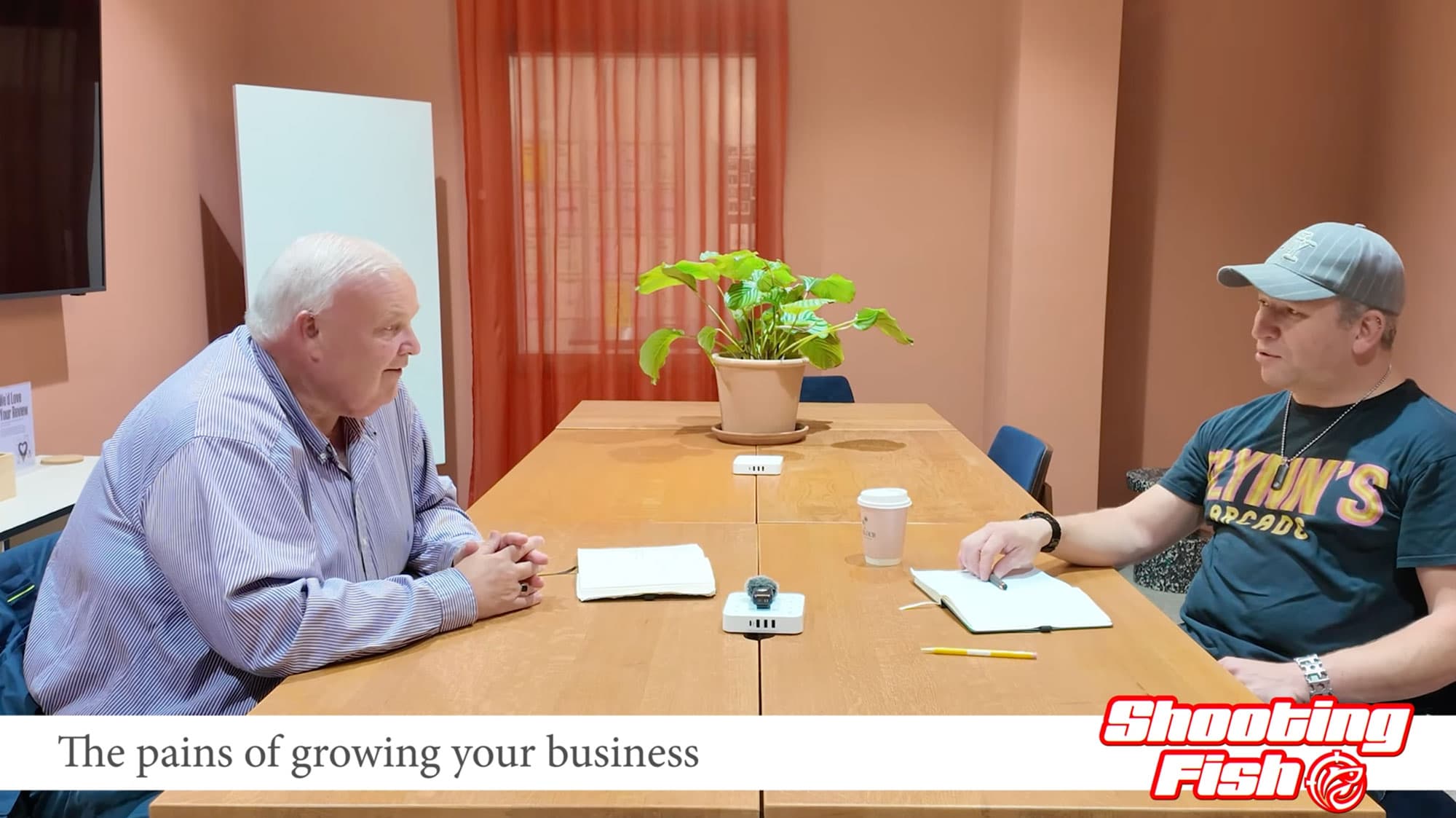
This is the third in a series of business conversations between Nigel Brown and Sam Howell of Sam Howell Business Consultants.
In this discussion, they look at one of the most familiar challenges faced by growing businesses: reaching the point where the owner is already working at full capacity, yet the next stage of growth requires more time and resource.
Nigel explains that small businesses often grow in steps rather than along a smooth growth curve, and introduces what he calls the “third of a person problem” - the point where additional resource is needed, but can still feel difficult to justify financially.
The conversation explores how owners can recognise when they themselves have become the constraint, create the spare time needed to grow the business and decide which tasks and responsibilities should be handed to someone else.
Growth Happens in Steps
Nigel explains that small businesses rarely grow in a smooth, predictable line.
Instead, they tend to grow in steps.
Each step arrives when the existing people and resources become stretched to their limit and the business needs additional capacity before it can move forward again.
Nigel describes this as the “third of a person problem”.
The owner reaches a point where they are already working at their practical limit, but the business may only appear to need a fraction of another person's time.
Financially, recruiting somebody can therefore feel difficult to justify.
Operationally, however, the business has reached a genuine constraint.
When the Owner Becomes the Constraint
One of the clearest warning signs is when the owner has become the limiting factor in the business.
Nigel describes the point where an owner is already working seven days a week and still cannot create enough capacity to grow.
At that stage, there simply is not another day available.
Working harder is no longer the solution.
The business needs additional resource.
The difficulty is that recruiting somebody introduces its own risk. The owner needs to be confident that the business can sustain the additional cost.
That tension between needing more resource and being nervous about committing to it is one of the key growing pains discussed in the conversation.
There isn't eight days in a week.
Create Spare Time for the Owner
Nigel argues that one of the key requirements for growing a business is creating spare time for the owner.
If the owner is permanently consumed by day-to-day work, there is no capacity left to focus on growth.
That may mean bringing in:
- an employee
- a part-time resource
- a subcontractor
- better software
- or another practical way of removing lower-value tasks from the owner's desk
In practice, the ideal solution is not always available.
Nigel gives the example of a business that may only appear to need somebody for around 15 hours a week, but finds that the people with the right skills are looking for full-time employment.
That can force the owner to make a larger commitment than they originally expected.
The important point is that some form of additional capacity eventually has to be created if the business is going to move forward.
To grow the business you've got to create spare time for the owner.
Working Harder Has a Finite Life
The conversation also addresses the danger of assuming that the owner can simply continue working longer hours.
Nigel is clear that working seven days a week has a finite lifetime.
There may be periods when intense effort is necessary.
He refers to corporate turnaround work where fixing a badly broken company can involve extremely long days.
But this cannot become the permanent operating model for a growing business.
Owners need to be honest with themselves about how long they can sustain that level of effort.
Even when somebody genuinely enjoys what they do, months can pass without a proper break.
That does not make the model sustainable.
Use A, B and C Task Analysis
Nigel suggests using a simple time-management exercise to understand where the owner's time is actually going.
Start by writing down the tasks being performed.
Then classify them according to their importance to the business.
A Tasks
The genuinely critical work that the owner or senior person should be focusing on.
B Tasks
Important work that may still require their involvement but should not dominate their time.
C Tasks
Lower-value activity that needs to be removed from their desk wherever possible.
The objective is to spend as much time as possible on the A-class work.
C-class tasks might be delegated to another employee, handed to a subcontractor, improved through software or removed in another practical way.
Nigel's point is that the owner's time has a particular value to the company.
If the owner is spending significant amounts of time doing work that could be performed well by somebody else at a much lower cost, that is often a sign that the business needs to change.
It Is Easy to Fill Your Time With C-Class Work
This problem is not limited to very small businesses.
Nigel explains that as businesses grow, it remains very easy for senior people to fill their lives with lower-value tasks.
Those jobs may be easier or more comfortable than dealing with difficult A-class issues.
Writing the tasks down and ranking them honestly makes the problem much easier to see.
The discipline is to focus on the work that genuinely requires the owner's knowledge, judgement or relationships rather than simply doing whatever is easiest to pick up next.
What Resource Do You Actually Need?
Once the owner understands which tasks should come off their desk, the next question is what type of resource the business actually needs.
Nigel notes that this often leads to roles such as:
- sales administrator
- office administrator
- operational support
The right person should not simply take work away from the owner.
Ideally, they should perform those tasks to a higher standard because they have the time, structure and focus to do them properly.
This creates two benefits:
1. The work itself improves.
2. The owner gets time back to focus on higher-value activity.
You Need Light at the End of the Tunnel
Another important part of the conversation is planning.
Nigel describes the importance of having “light at the end of the tunnel”.
Periods of intense workload are much easier to manage when the owner understands why they are doing it, how long it is expected to last and what the next step looks like.
Without a clear end point, the pressure simply becomes an ongoing way of life.
This is where planning and forecasting become important.
The owner needs to understand:
- what they are working towards
- what resource will eventually be required
- when that resource can be introduced
- what milestone will allow the business to move to the next stage
This clarity is important not only for the owner, but also for the people around them.
Practical Focus
Nigel's Three Things to Consider
Towards the end of the conversation, Nigel summarises three practical areas for any business owner thinking about growth.
01
Where are you spending your time?
Understand what you actually do each day and whether those activities represent the highest-value use of your time.
02
How are you going to create spare time to grow the business?
Identify what needs to be delegated, automated, subcontracted or handed to another member of the team.
03
What resource are you going to need?
Think ahead about the type of person or support the business will need to move through the next stage of growth.
The Bigger Lesson
Growing a business is not simply a question of working harder.
At each stage, owners need to recognise where capacity has become constrained and make deliberate decisions about how the organisation will move forward.
That means understanding where time is being spent, removing lower-value work, creating space for the owner to focus on the business and planning the next resource before the pressure becomes unsustainable.
As Nigel and Sam discuss, businesses repeatedly move through this cycle as they grow.
The challenge is recognising the point at which the current way of working has reached its limit and acting before the owner becomes the barrier to the next stage.
Next Step
Has your business reached its next growth step?
QBA provides experienced, practical leadership to help business owners strengthen operations, create capacity and plan confidently for the next stage of growth.
Talk to QBAMore Insights
Continue exploring.

How Operational Improvement Helped NTE Double a Buyer's Offer
How targeted operational improvements transformed a specialist engineering manufacturer, increased profitability and maximised shareholder value ahead of a successful business sale.
Read insight
The Art of Keeping Older Aircraft Flying
Why legacy aerospace manufacturing depends on specialist skills, flexible production and a different approach to supply chain value.
Read insight